Friday, March 25, 2011

John 12

John 12 records the end of Jesus' public ministry as he moves into Jerusalem for his passion.  It also offers us a good point to stop and reflect broadly on where we've been in the first half of John's gospel.  Chapter 12 is full of themes and motifs used through the entire gospel:

·      light-Here John records Jesus' words, "You are going to have the light just a little while longer.  Walk while you have the light, before darkness overtakes you.  The man who walks in the dark does not know where he is going.  Put your trust in the light while you have it, so that you may become sons of light" (v. 35).  These words echo John 1, where Jesus is presented as "the true light that gives light to every man" and Jesus' own words in John 9, where as he heals the blind man he says, "While I am in the world, I am the light of the world."  John wants desperately for us to know that Jesus alone can open our eyes to where we should go and how we should live.  Without his light, we stumble blindly through our broken lives, confused and afraid.
·      life-Near the end of the chapter, Jesus says, "I know that his [the Father's] command leads to eternal life" (v.50).  In chapter  11 Jesus said, "I am the resurrection and the life.  He who believes in me will live even though he dies; and whoever lives and believes in me will never die."  In John 6, Jesus says, "I am the bread of life.  He who comes to me will never go hungry. . . Everyone who looks to the Son and believes in him shall have eternal life."  And famously in John 3 Jesus claims, "For God so loved the world that he gave his one and only Son, that whoever believes in him shall not perish but have eternal life."  Over and over, John makes clear that Jesus has the power and the desire to give us life-true life-now and forevermore.  No failure, no mistake, no disease, no power, can stop him.
·      the unity of Father and Son-Why can Jesus do all this?  Because he is no less than God himself, clothed in human flesh that we might know him.  Here Jesus explains, "For I did not speak of my own accord, but the Father who sent me commanded me what to say and how to say it.  I know that his command leads to eternal life.  So whatever I say is just what the Father has told me to say" (v. 49-50).  Again, the words resonate because we've heard similar ones before-frequently.  In John 10 Jesus says, "Is it not written in your Law, 'I have said you are gods'? If he called them 'gods,' to whom the word of God came-and the Scripture cannot be broken-what about the one whom the Father set apart as his very own and sent into the world?  Why then do you accuse me of blasphemy because I said, 'I am God's Son'? . . . The Father is in me, and I in the Father."  Or in John 8, Jesus says, "If God were your Father, you would love me, for I came from God and now am here.  I have not come on my own; but he sent me."  Jesus and the Father are one.  God almighty loves us so much he became one of us that we might know him and rest in his love.
·      belief/unbelief-To receive this light and life and rest, we need only believe.  Many whom Jesus encountered did believe; many others did not.  By the end of Chapter 12, the word believe has appeared 64 times in the gospel of John.  Clearly, we have a choice to make: will we believe or not?

Chapter 12 ends with Jesus uniting all these motifs in a single last public statement before beginning the road to the cross.  In a loud voice, Jesus cries out, promising us light, life, and rest in God if only we'll believe. 
Believe.

Written by Jeff DeVries, a member of New Life Church.

Friday, March 4, 2011

John 9


When Jesus’ disciples approach him about the man blind from birth, they never consider the possibility of healing.  Despite the miracles they’ve seen, they enter into an argument about the blind man’s past, about the sin that brought him where he is.  From their perspective, the past is a sequence of events begetting events.  Everything has a cause, and the disciples want to know where to lay the blame for this man’s blindness.
But Jesus tells them they are asking the wrong question, that they are looking in the wrong direction.  This man is blind “‘so that the work of God might be displayed in his life.’”  In other words, Jesus has less interest in the past.  Grace is about to interrupt the old chain of events and create a bright new future
And this idea of looking in the wrong direction is echoed later when the Pharisees challenge Jesus’ authority.  Rather than celebrating in the blind man’s healing and promising new future, they look back to the Old Testament law of abstaining from work on the Sabbath.  Jesus, according to their interpretation of Torah, had broken the Sabbath and was blameworthy.
The past—for the Pharisees and the disciples—determines both the present and the future.  The past is responsible for the blind man’s condition.  The past holds Jesus in violation of Torah.  The past condemns all hope for a better future.  It’s simple karma—what goes around, comes around.
But Jesus is trying to get us to imagine a world that operates outside karma, a world where the past cannot dictate the future.  Instead, he introduces the notion of grace.  Even in our brokenness, God promises to make “‘everything new’” (Revelation 21:5).
And that’s the beauty of this chapter.  Grace interrupts the past.  It frees us from the curse of karma.  We need only to believe—as the blind man did and as the former slaver John Newton did.  Then we too can sing: “I once was lost / but now am found / was blind but now I see.”

Written by Ben DeVries, a New Life member and a senior at Illiana Christian High School.

Thursday, February 24, 2011

John 8

Thanks for taking up the reading challenge!  As you read through John Chapter 8 as preparation for the weekend, what do you think is the key statement or image? 

I would suggest (and you will hear more this weekend) it is that Jesus notes that He is the light – He is the light of the world!  Now – what does that mean?  How does that “reality of life” affect our lives? 

If Jesus is my light – how do I work through relationship challenges and even broken relationships?

If Jesus is my light – how do I handle finances and develop generosity?

If Jesus is my light – am I willing to be vulnerable before Him and others about my brokenness?

If Jesus is my light – am I open to new people and seeing them as gifts God has brought to me for the journey of life?

If Jesus is my light – do I treat Him as “ultimate” in my life?

I recently saw Tim Keller – a great preacher and writer (he wrote The Prodigal God) on Morning Joe on MSNBC.  During the course of the interview, he noted that we live in a world where we take good things (like work and family) and make them ultimate in our life.  The Apostle John is after us seeing Jesus as “ultimate” so that we frame and filter all of our life through Jesus.  He is the Light of the World.  He wants to be our light!  He wants to be your light! 

Grace and Peace – Jul 

Wednesday, February 16, 2011

John 7

In the 7th chapter of John in verse 38 we hear Jesus say…

Whoever believes in me, as Scripture has said, rivers of living water will flow from within them.”  

How are we to understand this statement?  Jesus was challenging the people, as well as us, to a personal faith in who He said he was… not to just react in belief or unbelief according to the crowd. We see many people being confused by this man Jesus and his ministry.  The people wanted to believe but then saw the resistance from the religious leaders and they questioned if Jesus could be the One, the Messiah, if he came from Galilee (vs. 41&42). 

Verse 43 even says that the people were divided “because of Jesus.” 

What are the things swirling around us that can cause us to question? To be divided in our belief? What are we reacting to? Who is influencing us?
How are we seeing Jesus?  The one “who seeks the glory of the one who sent him” (vs. 18). 

As we look together at this passage we will be able to sense the confusion of the people… but through that confusion (and yes our own confusion) let’s hear how much He wants us to know the Father and experience that river of living water in our lives.

 Written by Pastor Todd Wessles.  Pastor Todd and his wife Cindy live in New Lenox.

John 6


John 6 is all about bread, bread that gives life and Bread that gives Life.
The chapter begins with Christ’s feeding of the 5,000.  Having witnessed Jesus’ healing of the sick, a large crowd gathers to hear him preach.  Jesus, in compassion, anticipates the needs of this crowd, asking Philip, “Where shall we buy bread for these people to eat?” (v. 5).  As John points out, even as Jesus asks the question, “he already had in mind what he was going to do” (v. 15).  The disciples supply five barley loaves and two fish, and miraculously, over 5,000 are fed.
This miracle reveals Jesus as the supplier of our physical needs.  He knows we are flesh, and as he later teaches his disciples to pray for their daily bread, he here supplies it.  But he wants to do so much more for us.
When the crowds receive this food, John writes that they want to make Jesus king by force.  Jesus actually runs and hides from them.  But the crowds will not be deterred.  They search for Jesus into the next day, eventually finding him near Capernaum. 
Jesus greets them: “You are looking for me . . . because you ate the loaves and had your fill.  Do not work for food that spoils, but for food that endures to eternal life, which the Son of Man will give you” (v.27).  A few verses later, Jesus explains, “I am the bread of life.  He who comes to me will never go hungry, and he who believes in me will never be thirsty.  . . .For my Father’s will is that everyone who looks to the Son and believes in him shall have eternal life, and I will raise him up at the last day” (v. 35,40).
And remarkably, the crowds leave.  “This is a hard teaching,” they say.  “Who can accept it?” (v. 60).  How disappointed Jesus must have been.  Thousands wanted to make him king because he gave them bread, but when he wanted to give them so much more, they left.
Do we respond to God the same way?  We want secure jobs, good health, nice homes, and full bellies.  And if God will give us those things, we are content.  But Jesus wants to give us so much more.  He wants to give our lives direction and purpose.  He wants to bring reconciliation and healing to our relationships with each other and with God.  He wants to give us Life, now and forevermore.  All we have to do is believe. 
John 6 is all about bread, bread that gives life and Bread that gives Life.  Which one will we choose?

Written by Jeff DeVries, a member of New Life Church.
Tuesday, February 8, 2011

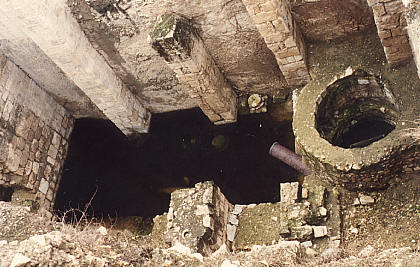
Review of John 5

“Do you want to get well?”

That is the question Jesus asked the man at the pool of Bethesda.  It seemed like an obvious question seeing that the man was sitting beside a pool that was known for miraculous healing and that he had been sitting there day after day for years.  And yet, there was no remedy for the many except to sit within inches of help and hope and wonder if he would ever get well.  
Jesus told the man to “Get up! Pick up your mat and walk” vs 8  The command came with the authority to make it happen and with the expectation that the man would testify to the miracle that had happened in his life.  And because the man obeyed, he was able to get up and walk for the first time in 38 years. 
This story, this command, this miracle have direct implications for our lives as well.  Jesus sees our heart and he can see the spiritual sickness we suffer from, even if we have the ability to hide it from others or even ourselves.  We, like the lame man, find ourselves within inches of the Truth, but unable to access it without the help of the Savior...and our willingness to obey him.  
“Do you want to get well?”  Jesus asks us the same question.  The cure for our spiritual sickness is believing that Jesus is the Christ, accepting the life that is offered through his sacrifice and then getting up and walking; testifying to others the life he has given us.  We are free to run, dance, sing and live in Jesus...if only we would “Get up and walk!”
“But these are written that you may believe that Jesus is the Messiah, the Son of God, and that by believing you may have life in his name.” John 20:31

Thursday, February 3, 2011

John 5


This chapter contains a very interesting story of a miracle of healing by Jesus on a man who was paralyzed for over 38years.   He would sit by the Pool of Bethesda daily.  The belief was that sometimes angel’s stirred the water with healing power.  If you were the first one in the pool, you would be healed.  So the paralyzed sat there day after day in his own brokenness unable to move one inch in order to be healed.  On this day he hears Jesus say “Do you want to get well?”

This occurs on the Sabbath.  Because Jesus had been doing miracles and preaching differently than the Religious Leaders, they began to accuse Jesus of violations of the law.  The 5th commandment (Exodus 20:8ff) to keep the Sabbath holy had been expanded to include 39 categories of things you could not do on the Sabbath.  Telling the formerly paralyzed man to carry his mat was one violation and the Religious Leaders accuse Jesus.

Jesus defends his work and clearly indentifies himself as God’s son. He wants everyone to know that he is the promised savior and that they can find healing in him.  He asks them the same question as he asked the paralyzed man – “Do you want to get well?”

While we don’t see ourselves in the same light and culture as the people in Jesus’ day, we are being asked to consider the same question that Jesus had for them.  “Do you want to get well?”  Consider what it might mean to really answer yes to this question.  How would our lives change if this were true?


Written by Pastor Roger Visker.  Roger is the Associate Pastor at New Life Church in New Lenox, IL.